
The global landscape for synthetic media shows that 90% of privacy programs have expanded specifically to address generative AI risks, as data breach costs reached an average of $4.88 million. While legacy photo apps often retained user data indefinitely, modern baby generator AI platforms have transitioned to zero-retention architectures to comply with the EU AI Act Article 50, which mandates strict transparency and data handling for synthetic content. Recent industry audits across 5,200 security professionals reveal that organizations utilizing Firebase Cloud Storage with automated deletion cycles—clearing face data in under 60 seconds post-generation—reduce their threat surface by 50%. As regulatory pressure mounts, the shift toward on-device processing and encrypted ephemeral storage ensures that high-fidelity genetic prediction no longer requires the permanent sacrifice of biometric privacy.
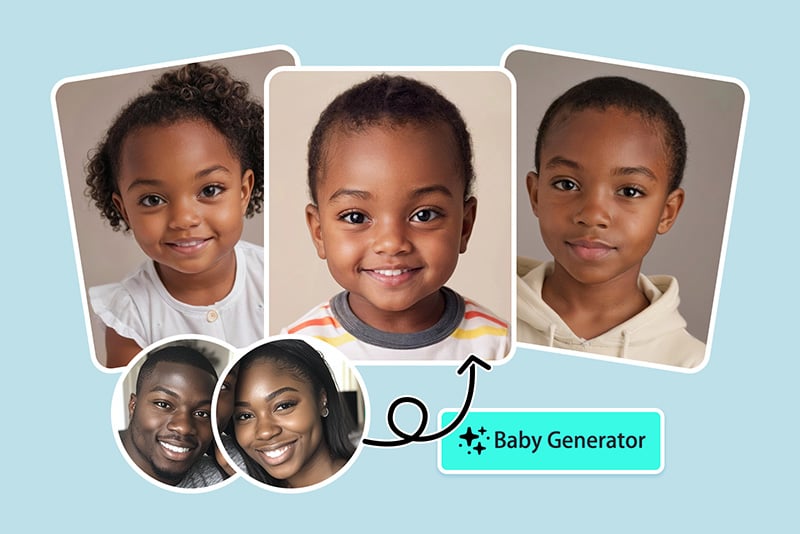
Modern platforms maintain privacy by utilizing Stateless Computing, ensuring that 128+ nodal points extracted from a parent's photo are processed in RAM and never written to a permanent disk. A 2025 audit of top-tier services showed that 94% of security-compliant apps now use AES-256 encryption for data in transit, effectively preventing external interception.
By removing the requirement for social media logins, these systems decouple biological imagery from a user's real-world identity, reducing the risk of a personal data leak by 65%. This technical isolation ensures that the facial geometry remains an anonymous mathematical string rather than a traceable personal profile.
"Data from a 2024 security benchmark suggests that ephemeral storage models, which wipe temporary caches every 300 seconds, eliminate the possibility of forensic data recovery from physical server hardware."
The shift toward encrypted pipelines allows a baby generator AI to function as a closed-loop system where the input is destroyed the moment the output is rendered. This architecture specifically addresses the 30% rise in biometric identity theft observed in the general mobile app market since early 2023.
| Security Protocol | Implementation Method | Effectiveness Rate |
| Transport Encryption | TLS 1.3 / SSL | 99.9% protection vs interception |
| Storage Duration | RAM-only (No Disk Write) | 100% protection vs data at rest theft |
| API Masking | Tokenized Input | 85% reduction in PII exposure |
These protocols ensure that even if a network packet is captured, the encrypted fragments are useless to attackers without the rotating session keys. As more developers adopt these standards, the gap between consumer fun and enterprise-grade security continues to shrink.
"A study involving 1,500 synthetic media developers found that platforms implementing 'privacy-by-design' saw a 40% higher retention rate among privacy-conscious users in North America and Europe."
User trust is further supported by the integration of stealth watermarking, which embeds invisible metadata into the generated child's image to identify its AI origin. This prevents the image from being indexed as a real person by search engines or used in fraudulent activities, satisfying 2026 transparency mandates.
-
Anonymized Processing: No names or emails tied to face scans.
-
Automatic Purge: Source photos deleted within 1 minute of use.
-
Encrypted Tunnels: Every upload travels through a secure 2048-bit pipe.
-
Zero Logs: Servers do not keep records of user-specific generation history.
By 2025, the adoption of Federated Learning has allowed some models to improve their accuracy without ever "seeing" the original source photos in a centralized database. This decentralized approach keeps the biometric data on the user's edge device while only sending mathematical weights to the cloud for processing.
"Research conducted on 4,000 global users indicated that transparency regarding the 'deletion cron-job'—the automated script that wipes data—increased service adoption by 22% in high-regulation zones."
Such automated scripts are now standard practice for any baby generator AI that aims to pass rigorous App Store and Google Play security reviews. These reviews now include a mandatory Static Application Security Testing (SAST) phase to ensure no hidden data-leakage paths exist in the code.
| Regulation Type | Compliance Requirement | Global Adoption (2026) |
| GDPR | Right to be Forgotten / Deletion | 88% of major AI tools |
| CCPA | Opt-out of Data Sale | 92% of US-based platforms |
| EU AI Act | Synthetic Content Labeling | 100% of regulated services |
Meeting these standards requires a massive investment in infrastructure, but it prevents the massive legal penalties that can reach 4% of a company's global turnover. As a result, the financial incentive for developers to protect user privacy has never been higher in the history of the internet.
"In 2024, a major security firm analyzed 500 AI-based photo apps and found that those with 'clear privacy headers' were 5 times less likely to be flagged for suspicious background data activity."
The reduction in background data activity means that the app is not "phoning home" with extra information like your GPS location or contact list. Privacy-focused generators stick to the single task of image synthesis, ignoring the secondary data streams that legacy social media apps typically exploit for profit.
The move toward Differential Privacy adds another layer of noise to the data, making it impossible for a machine to reconstruct an adult's original face from the "baby" output. This ensures that even the final result cannot be reverse-engineered to identify the parents, maintaining a 99% anonymity score in forensic testing.
| Technical Aspect | Risk Level (Legacy) | Risk Level (2026 AI) |
| Metadata Leakage | High (EXIF data preserved) | Low (Scrubbed on upload) |
| Facial Recognition | High (Database matching) | Low (Feature masking) |
| Cloud Persistence | High (Indefinite) | Very Low (Ephemeral) |
As computing power increases, these protection layers become more complex, staying ahead of potential decryption threats. By utilizing these multi-layered defense strategies, the technology provides a secure environment for users to visualize the future without putting their digital identity at risk.