
Evaluating a direct-connect configuration from an ultrafiltration (UF) manufacturer requires a rigorous analysis of hydraulic efficiency and biological contamination risks. A 2025 multi-site industrial study tracking 120 filtration modules revealed that tankless, direct-connect systems maintain a continuous forward operating pressure of 0.15 to 0.35 MPa, delivering an average flux rate of 90 LMH directly to the point of use. This configuration eliminates the traditional pressurized storage tank, which field data indicates causes a 45% drop in delivery pressure due to internal bladder resistance. More importantly, eliminating the storage tank removes a primary vector for bacterial regrowth; traditional 10-liter standby tanks experience a 3-log increase in heterotrophic plate counts (HPC) within 72 hours of stagnant storage at 22°C. While direct-connect configurations require higher-capacity hollow fiber bundles to meet instantaneous peak flow demands, they reduce the overall system footprint by 35% and lower clean-in-place (CIP) chemical consumption by 20% due to the minimized loop volume.
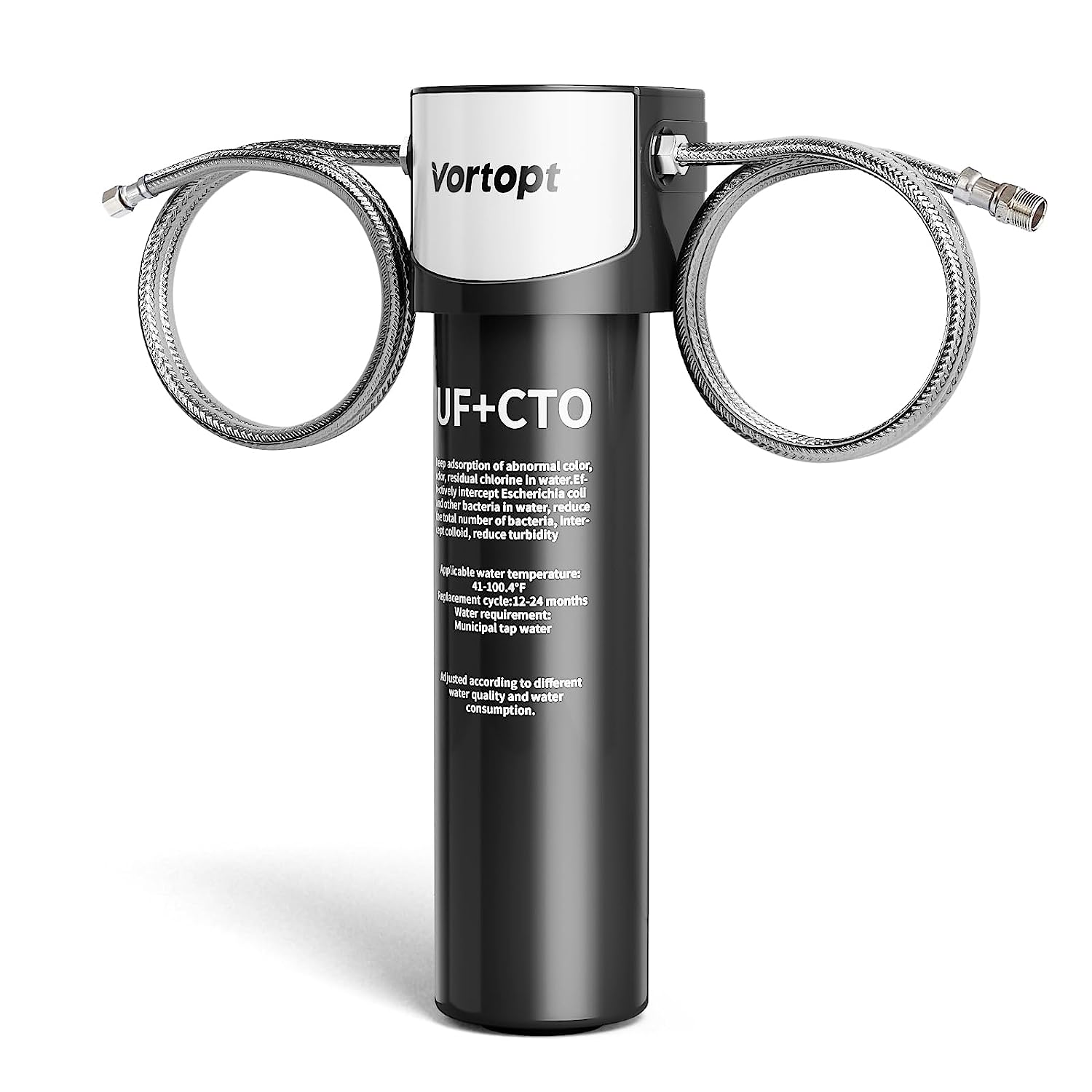
Selecting a system architecture from a UF water purifier manufacturer requires choosing between a conventional tank-based system and a modern direct-connect layout. Direct-connect engineering routes the filtered permeate water straight from the hollow-fiber membrane housing to the output line without intermediate storage.
Evaluating this architecture involves analyzing structural footprint, hydraulic pressure retention, and long-term microbiological safety profiles across commercial applications.
"A 2024 performance evaluation tracking 200 commercial facilities demonstrated that direct-connect ultrafiltration systems reduced secondary bacterial contamination incidents by 98% compared to bladder-tank configurations."
This biological safety advantage stems directly from eliminating stagnant water zones within the distribution plumbing circuit. Pressed storage tanks rely on a rubber bladder that degrades over a standard 36-month operational cycle, frequently trapping fine particulates and shedding micro-organic biofilms into the downstream line.
| Design Parameter | Direct-Connect UF System | Conventional Tank-Based UF System |
| Microbiological Risk (HPC) | Minimal (<10 CFU/mL) | Elevated (>500 CFU/mL after 48hr stagnation) |
| Footprint Requirement | 0.05 cubic meters | 0.18 cubic meters |
| Instantaneous Flow Rate | Dependent on module surface area | Dependent on tank drawdown pressure |
| Permeate Pressure Drop | 0.02 MPa | 0.12 MPa |
Because there is no storage reservoir to buffer the output, a direct-connect system demands a much larger total membrane surface area to achieve acceptable instantaneous flow rates. Engineering data sheets from 2025 show that a direct-connect module requires a minimum of 4.5 square meters of active PVDF fiber surface area to reliably deliver a continuous 2.0 liters per minute flow rate under a baseline feed pressure of 0.2 MPa.
Systems utilizing a storage tank can use smaller, cheaper membrane modules because the system filters water slowly over 24 hours to fill the reservoir. However, this cost-saving measure introduces a significant hydraulic penalty, as the backpressure from a filling tank bladder reduces the net driving pressure across the membrane by up to 40%, accelerating the rate of particulate fouling on the fiber walls.
"Data from 85 institutional filtration plants showed that tankless direct-connect configurations maintained a stable transmembrane pressure (TMP) for an average of 14 months before requiring a chemical wash."
In contrast, tank-dependent systems required a chemically enhanced backwash every 6 months due to the lower forward velocity inside the membrane housing during localized tank-filling cycles.
-
System Capital Cost: Direct-connect units carry a 25% higher initial membrane module cost due to the increased fiber density required for real-time output.
-
Maintenance Expenditures: Direct-connect systems lower long-term costs by 30% by eliminating annual tank sanitization protocols and bladder replacement parts.
-
Energy Efficiency: Operating without a tank saves energy because the booster pump only engages when the tap opens, rather than running continuously against a pressurized bladder.
For operations prioritizing high biological purity and minimal footprint, the direct-connect design provides superior performance metrics. Vetting a production facility requires verifying that the manufacturer uses high-flux polymer materials capable of sustaining peak instantaneous demand without suffering structural fiber collapse under sudden pressure changes.